

What To Expect From Our Analog Film Process
We are Chellise & Mike, New York City & Hudson Valley-based documentary-style film and digital wedding photographers. If you have any questions about our processes not covered in this FAQ, feel free to reach out.


Why Do You Shoot On Film?

Film holds time differently. The light is softer, the grain gives texture, the skin tones are delicious; it's tactile, luscious, lucid, and it feels like a dream. It’s always giving us more than we could have hoped for. It's undeniably perfect and has a way of making an image taken just yesterday feel nostalgic.
Mike and I have shoeboxes stacked to the brim in our cedar closet filled with prints and polaroids. Every photograph from childhood up until our 30s was shot on film and printed. Holding those photographs in my hands carries so much more weight to me than a digital photo on a screen ever could. And while we no longer print every roll of film (because we dont have to anymore), still having the digital film scan is a pretty beautiful second.

How Long Have You Been Shooting On Film?

All of our lives, because that's what we were raised on. My first camera was a Polaroid, and Mike's was an Olympus point-and-shoot.
In 2012, we started shooting weddings with a few rolls of film in our bag, just for our own satisfaction. Most of our couples didn't seem excited about it, or even knew what it was, so the pressure was off, which allowed us to get really creative and experiment with expired film stocks and all kinds of cameras. All those years allowed us to get comfortable and weird on film - it was so exciting for us, and our clients loved it too. We have been hooked ever since.
In 2022, when the rising demand for analog film at weddings picked up, we were ready with open arms and have gone full throttle ever since. Documenting weddings on analog film for this new generation of couples who genuinely appreciate it as much as we do has breathed new life and immense excitement into our process. And since analog limits us to a small, finite number of frames per roll, it has sharpened our intuition as photographers. Film has forced us to slow down, and as a result, our work has become so much more personal and intentional.
Do You Have A Defined Film Style?

We want to create something artful and extraordinary while still capturing the moments you’d expect from a professional. We’re not the ones going for high-def, polished images - instead, we're going for something softer, nostalgic, grainy, gritty, raw, and tactile, so our film camera choices and processes reflect that. To us, weddings are a big, beautiful, emotional, fun, collective experience, and it’s our obligation to honor it as it naturally unfolds, with some unconventional lucid-dream pics dropped in for the art wall.
Analog gives us this, and luckily for us, we attract like-minded couples who also want their photos to have soul, grain, and texture.
How Much Film vs. Digital Do You Shoot At Weddings?

Um. A lot.
Mike shoots exclusively with film cameras; he usually has 5-7 cameras hanging from his body, a mix of ever-evolving 35mm and medium-format cameras.
I, Chellise, blend digital and film, and while I can't give specific percentages of how much of each I shoot, I will say it’s as much analog film as I can possibly shoot. Film is Queen, and I only lean on digital when it makes sense in the moment.
What’s The Biggest Misconception About Shooting Weddings On Analog Film?


The most misleading phrase we keep hearing is that “film has its place,” implying that digital is needed for backup and for dark spaces. We think this is false and misleading, since every wedding documented before digital took over in 2007 was shot on film. You only need to look at your parents' and grandparents' wedding albums for proof.
So, let’s lay this myth to rest. It depends on the photographer's expertise and comfort shooting on film, and on their use of flash in dark, cavernous venues like those in NYC. Mike is exceptionally skilled in this arena. Everything in his portfolio is 100% film.
Do You Edit Your Film?

To a very limited degree, yes.
Each film stock has its own beautiful color profile, which we honor; however, if we feel it’s needed, we adjust color, blacks, contrast, and exposure to our liking.


How Do You Handle Dark Wedding Venues With Film?

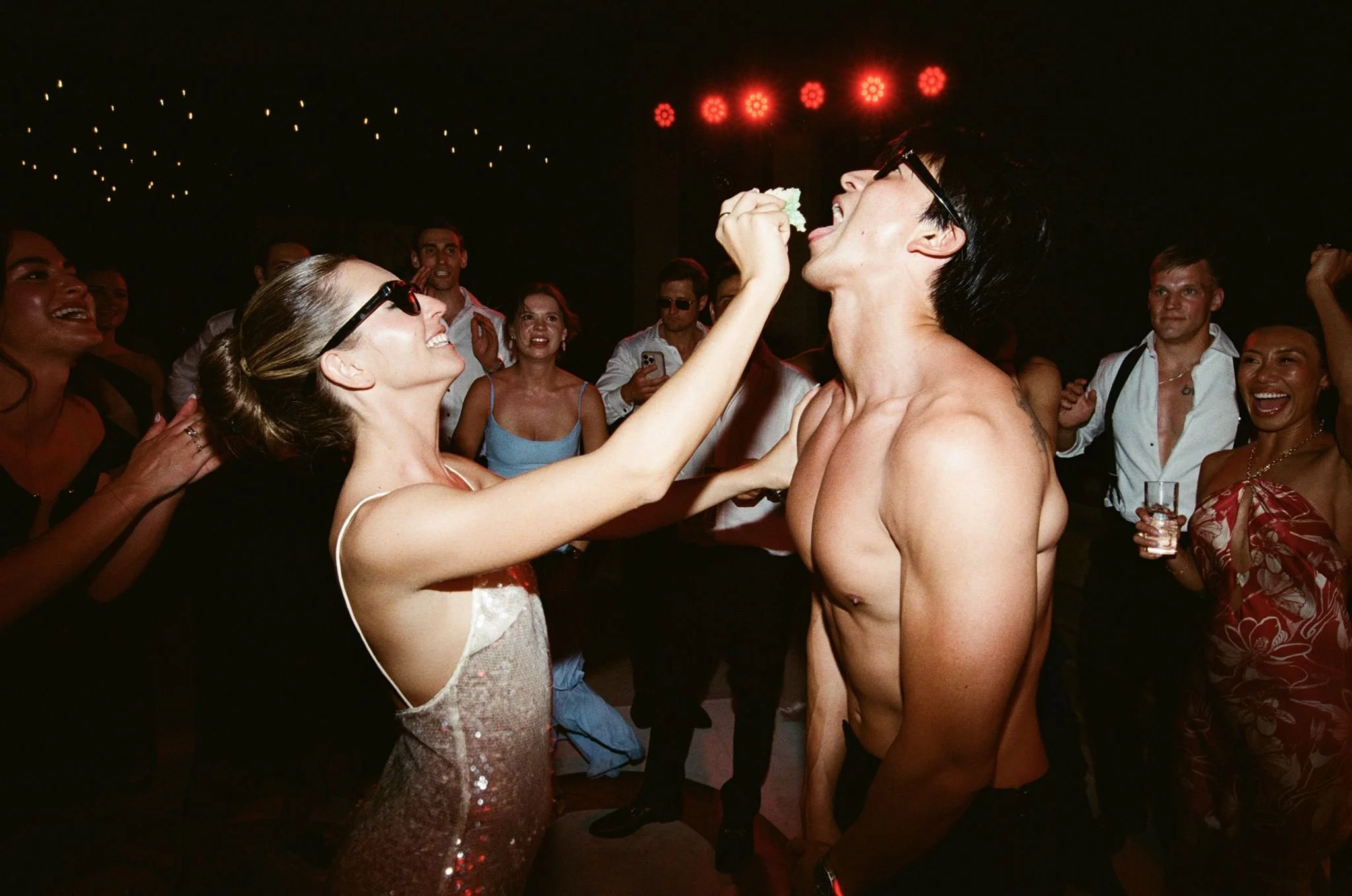
hand held flash
direct, on-camera flash

ambient lighting
We have a multitude of tricks up our sleeves for big, dark, moody spaces. (NYC trained us well…)
We prefer discreet remote flashes, which let us pop the flash for a nanosecond when needed. This process creates a beautiful, cinematic look while preserving the space's ambient mood and not blinding you or your guests (youre welcome!). We also use direct and handheld flash and shoot in ambient light.
All of this gives our couples a very textured, multidimensional set of images.
It is worth noting that we do not use continuous lighting (bright, LED lights that stay on constantly and, in our opinion, kill the vibe)
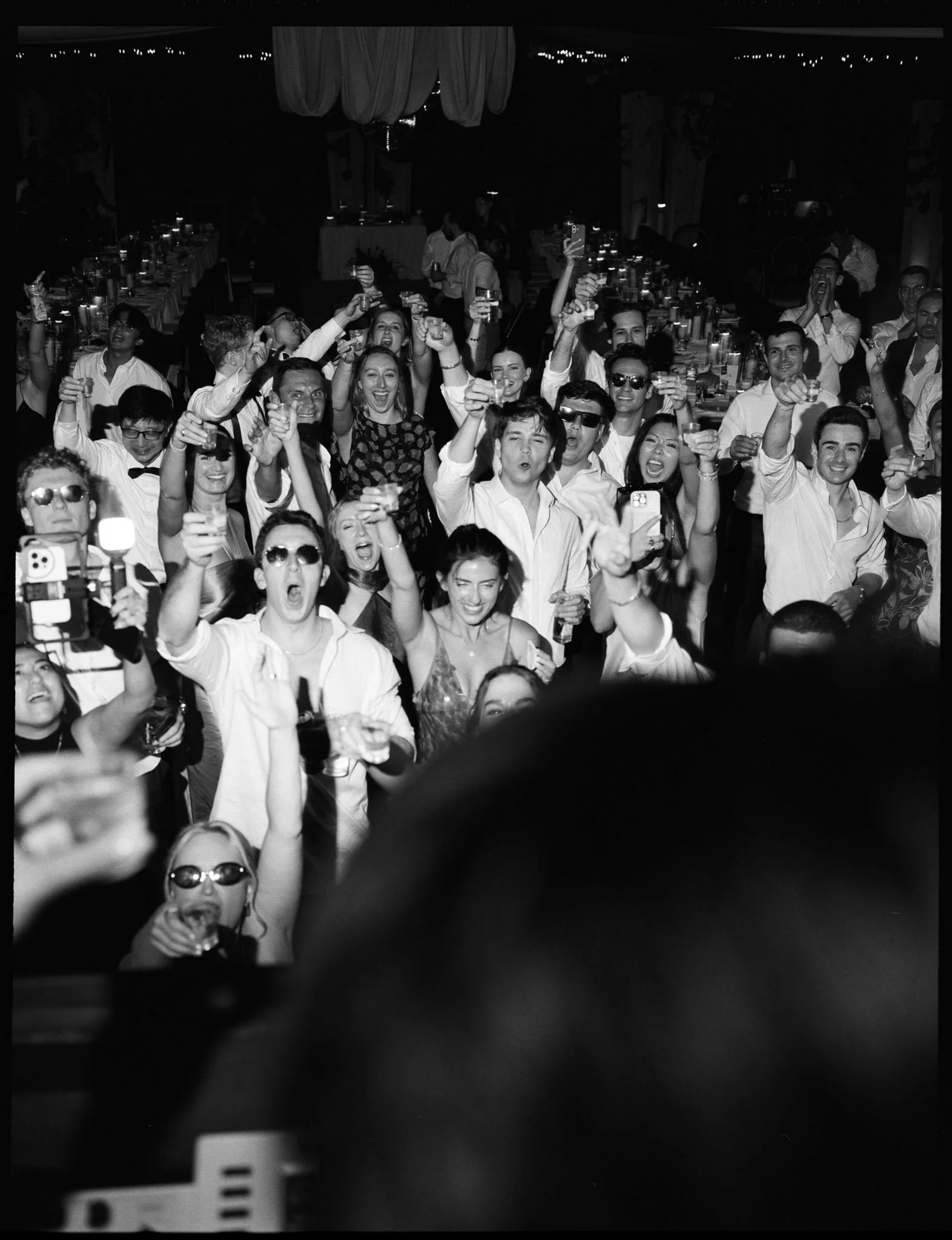
remote off-camera flash
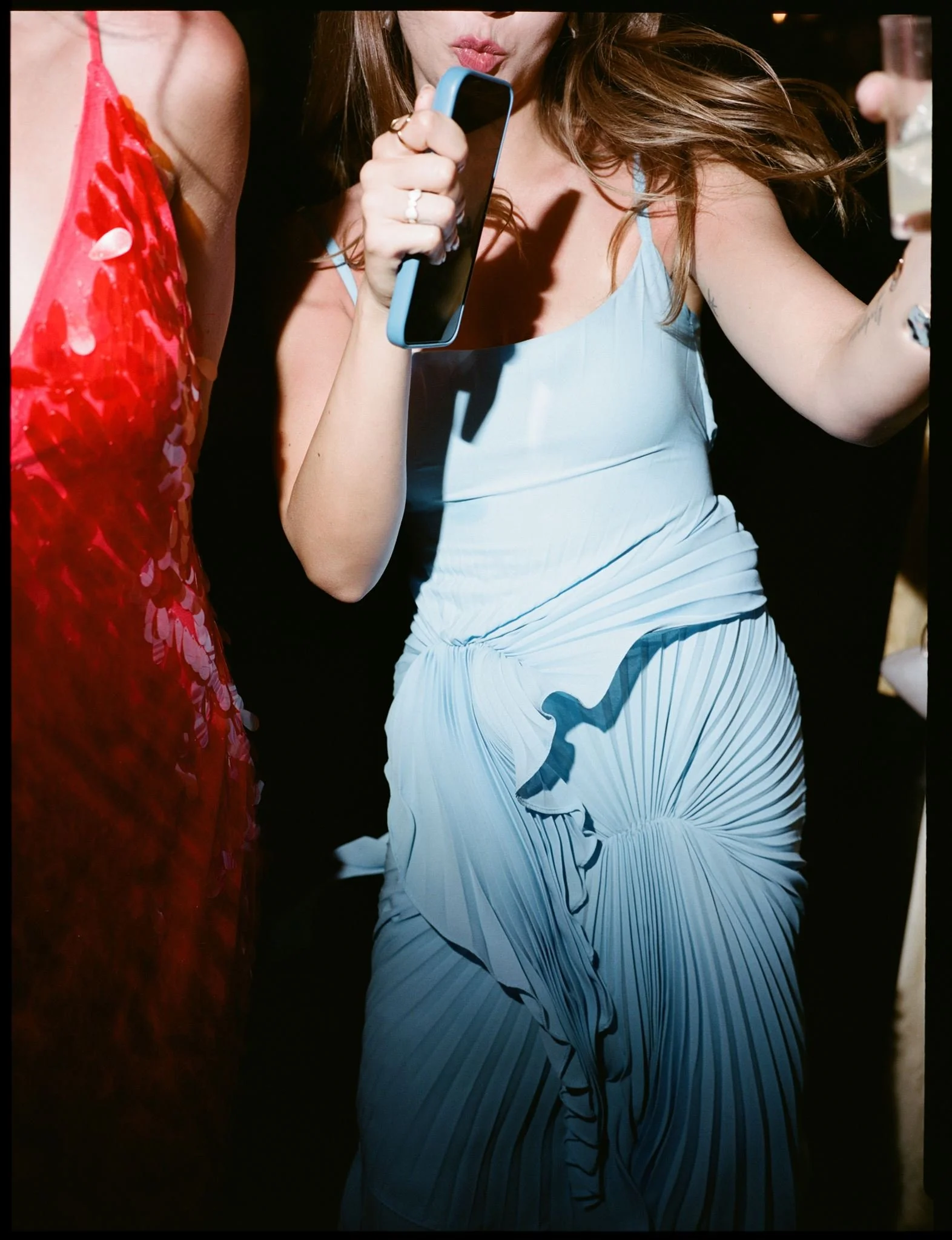
hand held flash
Where Is Your Film Developed?

We hand-deliver all of our film to our lab in NYC.

How Do You Deliver Film Photos To Your Clients?

While we would love to send a massive box of 4 x 6" prints with a bow on top as the final product, that's not going to fly these days (unless you want us to?).
We scan all our film in high res and share it with clients via a private online gallery. Negatives are archived in-house.

How Much Do Your Film Wedding Photography Packages Cost?


For current collection pricing, visit our pricing page
How Far In Advance Do You Book Out?


If we had to average it, 9 months to 1 year out is the zone for us. In New York, May, June, September, and October are the most in-demand months, as well as holiday weekends, so we get booked up quickly for those. We each take no more than 15-20 weddings per year and hope one of them is yours! To enquire about our availability, contact us here.
